Pressure sores or bed sores are sores that form over bony parts of the body when a person lies or sits on that
particular part of the body for too longwithout moving.
Where the skin is pressed against the bed or chair, the pressure causes a decrease in the blood flow. If too much
time passes without moving or rolling over, the skin and flesh in that area can be injured or die. First a red or
dark patch appears, and if pressure continues the skin breaks down creating an open sore
When a normal, healthy person lies or sits in one position for a long time he begins to feel uncomfortable, which makes him/her move or roll over to let another part of his body bear his weight. A person with a spinal injury
These two points that make them at a very high risk of developing pressure sores.
Pressure sores are very common in persons who are bed ridden and those who have lost sensation in parts of their body such as persons with spinal cord injuries or aged persons.
Pressure sores if allowed to develop and not carefully managed can become large and deep. They can easily become infected because they contain dead skin & flesh. If a sore reaches the bone (which it often does), it can become infected. Bone infections are very hard to cure & may last for years. Infections in deep pressure sores often get into the blood and affect the whole body causing fever and general illness. THIS CAN EVEN LEAD TO DEATH.In fact, pressure sores are one of the main causes of death in persons with spinal injury.
Parts of the body where skin and subcutaneous tissues that overlie bony prominence are likely sites for pressure sore formation. The parts where they form most often are shown in the picture. The points coloured red are the points of highest risk.
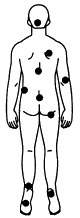
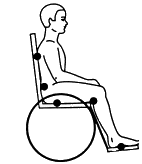

The most important factor is unrelieved Pressure.
The other critical factors are:
YES. Pressure sores can be prevented completely provided you turn in bed every 2 hours day and night and change position every 10 minutes when sitting.
A PRESSURE SORE TAKES ONLY HOURS TO DEVELOP BUT IT TAKES MONTHS OR AT TIMES YEARS TO HEAL. AS FAR AS POSSIBLE, YOU SHOULD TAKE RESPONSIBILITY FOR YOUR SKIN CARE YOURSELF.
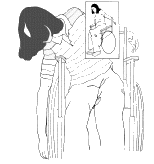
.gif)
a push up every 10-15 minutes when sitting and turn every 2 hours while in bed
To prevent pressure sores it is essential that you lie & sit on a soft surface, that reduces pressure on bony areas.
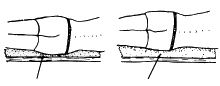
It is best to lie on a flat surface with a thick spongy mattress. A thick foam rubber mattress often works well. However some foam are so spongy that it sinks completely down under weight. Then the bony areas are no longer protected from pressure Therefore, the right mattress should be firm, thick and smooth.
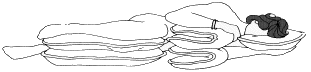
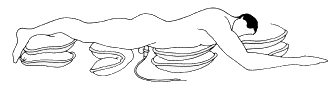
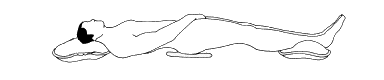
Careful placement of pillows, cushions or soft folded blankets can also help prevent pressure sores. Correct positioning not only prevents pressure sore but also prevent contractures. In a wheelchair also always use a firm cushion, sitting directly on a canvas or metal seat can cause sores.
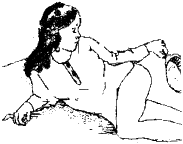
Watch for the first sign of a pressure sore by examining the whole body every day. You can do this yourself by using a long handled mirror
If you can notice any of the danger signs, e.g., redness, paleness, darkness, warmth or unnatural wrinkles over any susceptible points, then avoid pressure on that area until the warning signs disappear. This means not lying or sitting on that particular part.
Do not rub or massage the areas where pressure sores might be forming. This could tear weakened flesh & make the sore underneath worse.
Never use a rubber tube or ring or a doughnut of cloth to keep weight off the sore. This can cut off the blood flow to the skin inside the ring & make the sore worse.